Carry-on: what needs to be within reach, not in the hold
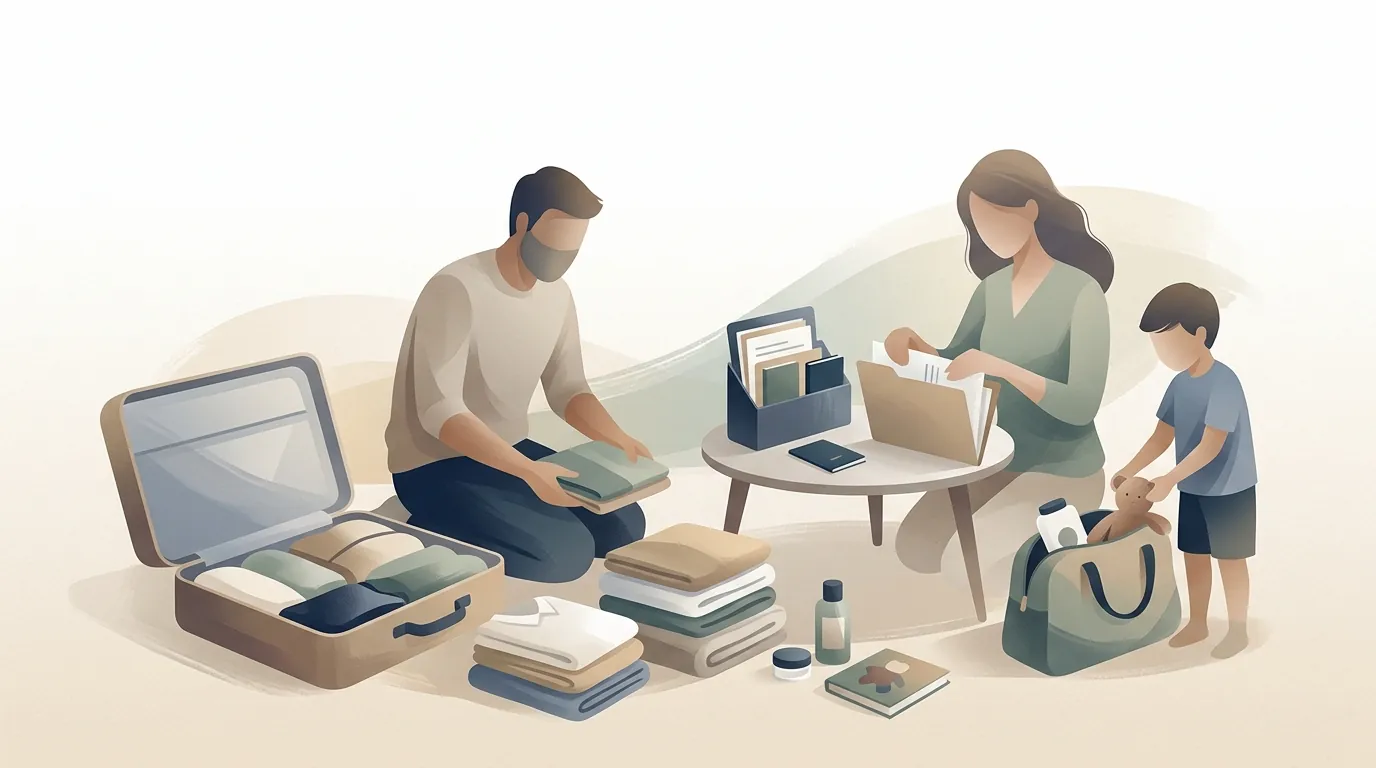
Anything essential should travel in the cabin with you, not checked. This includes medical documentation, prescriptions, any communication device your child uses, comfort items, and a change of clothes. If a bag goes missing or is delayed, this is what you don't want to be without on arrival.
- Medical documentation: recent assessments, prescriptions, and emergency contact information, easily accessible rather than buried in a folder.
- Communication devices and chargers, plus a backup if your child relies on an AAC app or device, battery failure at the wrong moment is a real risk worth planning around.
- A full change of clothes for your child, and ideally one for yourself.
- Any regular medication, with enough supply for the full trip plus a buffer, in original packaging with a prescription copy.
Comfort items: bring what's familiar, and don't wash it first
Sensory comfort items, a weighted item, noise-cancelling headphones, a favourite blanket or toy, fidgets, chewies, make a real difference during unfamiliar transitions like airport security and boarding. If your child has a comfort item with a specific, familiar smell, don't wash it before the trip, that familiarity is part of what makes it work in a new environment. Pack duplicates of small items like fidgets where you can, losing the only one mid-journey is a common and avoidable stressor.
- Noise-cancelling or noise-reducing headphones for airport and flight noise.
- A familiar blanket, toy, or weighted item, unwashed if that's part of what makes it comforting.
- Multiple fidgets or sensory tools, duplicates matter more than variety.
- Chewy snacks or oral-sensory items if your child seeks that kind of input.
Food: pack more than you think you'll need
Airport and airline food options are limited and often unsuitable for a child with dietary restrictions or selective eating. Pack a generous variety of snacks and mini meals your child already eats, checking that anything liquid or gel-based complies with airline carry-on rules. Chewy foods like fruit gummies can double as both a snack and a sensory-seeking tool during a long flight.
Entertainment and downtime
Pack favourite toys, books, and any plane-safe electronics, but plan for stretches where electronics aren't permitted, during takeoff and landing in particular. Tactile items like stretch bands or small balance tools can help release energy during long waits without needing a screen.
Before you even get to the airport
Preparation matters as much as packing. If a visual schedule or social story helps your child understand what's coming, use it in the days before the trip to walk through security, boarding, and the flight itself. Physical activity in the hours before travel, running, jumping, anything that burns energy, can make the long sitting-still stretch of a flight noticeably easier. If your child has needs the airline should know about, call ahead, airlines can often accommodate more than families expect, but only if asked in advance.
On the day: practical reminders
Keep your comfort item and communication device in a bag that stays with you, not in an overhead bin you can't easily reach mid-flight. Build in extra time at every transition point, security, boarding, immigration on arrival, rushing tends to make sensory overwhelm worse, not better. And have a loose contingency plan for delays: airports and airlines generally have support resources, and it's worth knowing where to find them before you need them.
What to pack once you've landed in Delhi NCR
Once you've arrived, the same principles apply on a smaller scale: keep your child's comfort items accessible during the transfer to accommodation, and try to protect the first evening as a low-demand settling-in period rather than diving straight into a full schedule. A predictable first day tends to set the tone for how the rest of the trip goes.